It’s been quite a while since I have dipped my toes into the pool of hard(ish) science fiction, and I’ve never written a review of a novel like that. This was a fascinating novel to tackle.
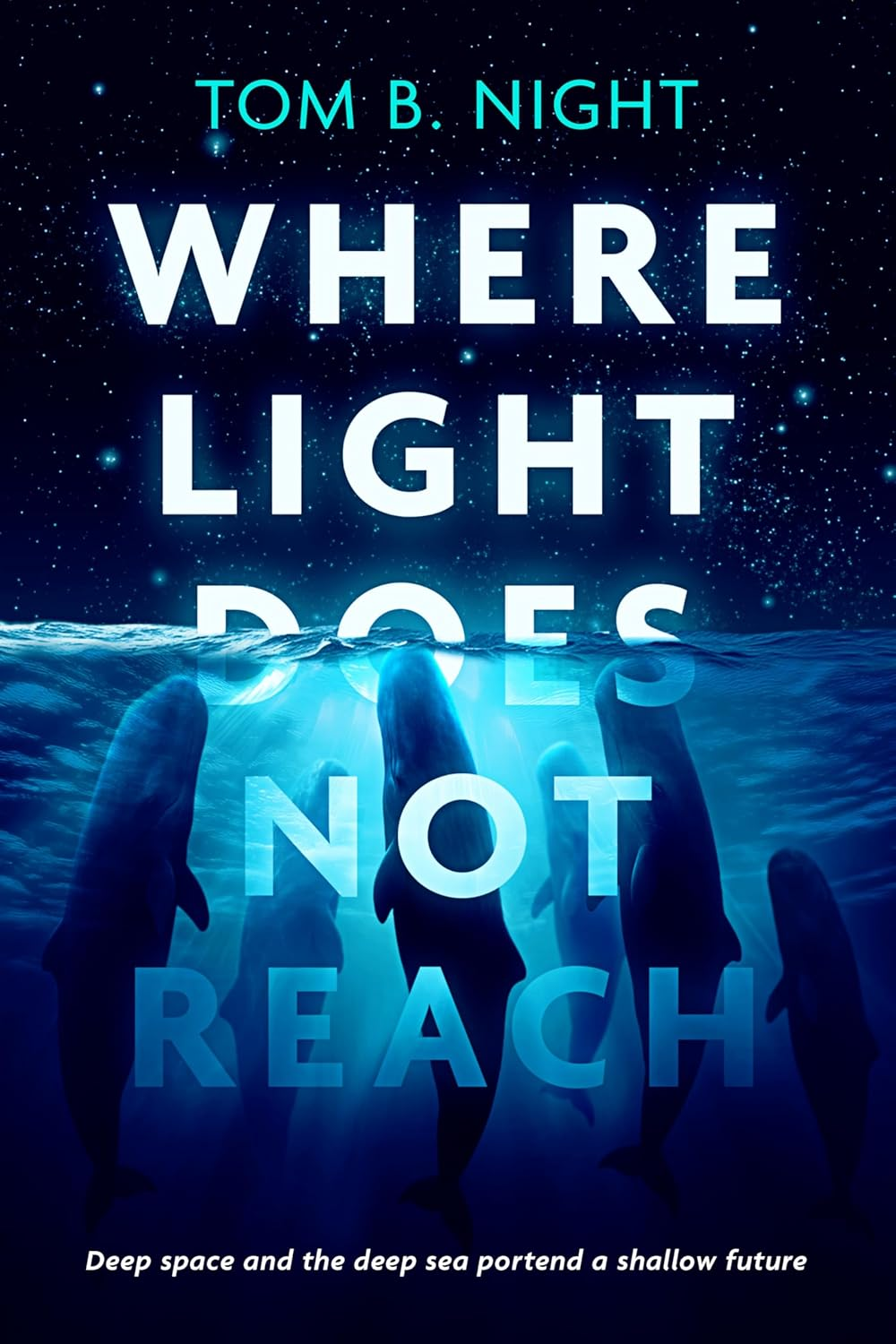
The cover drew me in immediately. It is stunning, with the whales and the starlit sky. Then there’s the premise. What intrigued me with this one is how a novel could connect communication with sperm whales to discoveries in space. I am a sucker for a fantastic and mysterious premise (as in the unconventional possibilities in my website tag line) so I dove right in – pardon the ocean pun.
The book follows Soledad, a whale researcher who is doing groundbreaking work in cetacean communication. She tries to get to the bottom of why the world is seeing mass sperm whale strandings on an unprecedented scale. Her point of view alternates with Jack Dash, an astronaut turned astronomer who works for SETI and is developing cutting edge theories about empty regions in space. Things heat up for him when he discovers that stars are mysteriously disappearing in unexplained ways.
These two characters end up meeting. I love how the dynamic between these two is very father-daughter. Jack is 60 and Soledad is much younger. The novel didn’t even try to make them a romantic couple, which is refreshing.
Eventually the characters begin to see how their work intersects as strange events play out and threaten Earth. I can’t say much more without dropping spoilers, but the consequences for our world are immense.
Soledad and Jack face a race against time to save humanity. Nothing will ever be the same again, whether they fail or succeed – but there are still advantages to pulling off a coordinated operation. I found it to be a stunning concept and creative solution to the problems that arise.
This novel relates a lot of interesting science concepts to the reader in ways that enlighten, but don’t bore you. That is a fine line to walk. It ties the information to the plot well, also. Sometimes the action slows for these chunks of information. It was noticeable and a little info dumpy, but overall, I think it works for the book given the harder sci fi emphasis, where many readers love a lot of real scientific detail. In the end, I wasn’t terribly distracted by the detailed conversations relaying the science.
Who is this book for? You’ll likely enjoy this if you are intrigued by either marine mammals, astronomy or both. If you enjoy approachable science concepts in your fiction, this may also be the book for you. It’s categorized as hard science fiction. The author does have a technology background, but since I am not well versed in either whales or astronomy, I can’t vouch for how rigorous his science is, but the research conveyed in it convinced me. If you’re an expert in either, you may notice things I did not. Finally, if you like books the deal with cataclysmic and creative threats to humanity, this may be perfect for you.
To order the book, follow this link.
Thanks for reading!